Quick answer
For most job seekers, a reverse-chronological resume is the strongest choice. It puts your most recent, relevant work first and makes your career timeline easy to scan. A functional resume can be useful in a narrow set of cases, but it often makes an employer work harder to connect a skill to a role, company, and date. If you are changing careers or returning after a gap, use a combination resume: keep a clear reverse-chronological work history, then add a focused summary and skills section above it.
The goal is not to make your history look perfect. It is to make your value easy to understand quickly. This chronological vs functional resume guide will help you choose the clearest structure for your situation.
What is the difference?
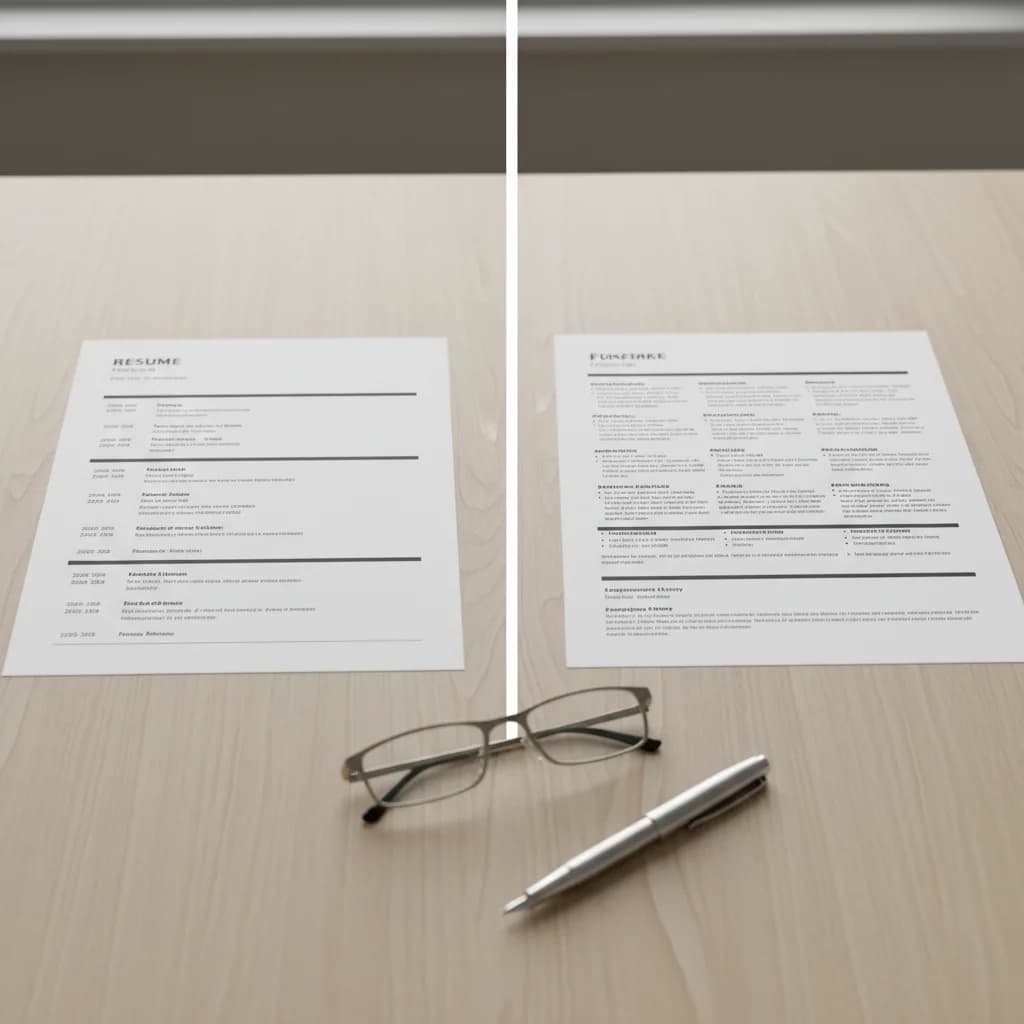
A reverse-chronological resume lists your current or most recent role first, then works backward. Each position includes an employer, title, dates, and results.
A functional resume groups experience under skills such as Project Management, Customer Success, or Data Analysis. Work history usually appears later and may contain few details.
A combination resume begins with a concise summary and selected skills, but still includes a complete reverse-chronological experience section. It is usually the better alternative when you want to foreground transferable skills without hiding the timeline.
| Format | Best for | Main strength | Watch-out |
|---|
| Reverse chronological | Most applicants | Makes progression and recent impact easy to scan | Requires thoughtful handling of gaps or frequent moves |
| Functional | A very limited number of portfolio-led or project-based cases | Can group related skills together | Can separate achievements from the work context that proves them |
| Combination | Career changers, returners, and specialists | Highlights fit while retaining a clear timeline | Can become crowded if the top section repeats the experience section |
Why reverse chronological works for most applications
Hiring teams usually need to answer a few practical questions fast: What have you done recently? Where did you do it? How long did you do it? What changed because of your work? A reverse-chronological layout answers those questions in a familiar order.
It also gives your accomplishments context. Compare these two bullets:
- Improved reporting and stakeholder communication.
- Built a weekly executive reporting process at Northstar Health that cut manual updates from two days to four hours.
The second statement is stronger because it ties the skill to a role, setting, and outcome. That context helps a reviewer assess relevance. It also gives you a clear story to expand on in an interview.
A clear timeline supports practical screening, too. Keep dates, company names, titles, section headings, and bullets plainly formatted. Avoid placing essential information in graphics, headers, or tables. The objective is simple: make the document easy for both a person and a hiring system to read.
When a functional resume may make sense
A functional resume is not automatically wrong. It can help when the work itself is highly project-based, when a portfolio carries most of the proof, or when a candidate needs to organize experience that occurred across freelance, volunteer, and short-term engagements.
Even then, do not remove the facts a reviewer needs. Include a concise employment or project timeline with organization, role, and dates. A skills section should help the reader find evidence, not make them hunt for it.
If you are considering a functional format because of a gap, a career pivot, or several short roles, a combination resume is typically clearer. It lets you lead with relevant capabilities while keeping the chronology intact.
You have a steady career path
Use reverse chronological. Lead each role with two to four accomplishment bullets that mirror the priorities in the job description. Put your most relevant wins first, even if they were not your biggest wins overall.
You are changing careers
Use a combination resume. Start with a three- or four-line summary that names the target role and connects your prior experience to it. Add a short skills section, then show your employment history in reverse chronological order.
For example, a teacher moving into customer enablement might emphasize facilitation, curriculum design, stakeholder communication, and learning measurement. The work history should then demonstrate those skills with concrete examples.
Need help translating your experience? Read CoPrep's career change guide and use the AI Resume Builder to build a tailored resume for the role you want next.
You have an employment gap
Keep the timeline. You do not need to over-explain on the resume, but avoid disguising dates. If the gap included caregiving, study, a move, contract work, volunteering, or independent projects, add only the relevant activity in a straightforward way. Prepare a short, confident explanation for conversations.
You have limited professional experience
Use reverse chronological and expand what counts as evidence: internships, campus jobs, course projects, volunteering, certifications, and relevant freelance work. Focus on the result and the skill you applied. CoPrep's guide on how to write a resume with no experience can help you turn that work into credible bullets.
You are a technical specialist
Use a combination resume, but keep it disciplined. A compact Skills section can list tools, methods, or certifications. Your experience section should prove how you used them. A list of technologies is not a substitute for outcomes.
Use this checklist before you apply:
- Put your target role near the top of the page.
- Use a professional summary only when it adds direction; skip vague claims such as “hard worker.”
- Keep company, title, location, and dates together for every role.
- Lead bullets with actions and finish with a result, scope, or metric when you can support it.
- Tailor the language to the job description without copying it mechanically.
- Keep the layout simple: clear headings, standard fonts, readable spacing, and no information trapped in images.
- Remove older or unrelated details that do not help the target role.
- Save a clean PDF only after checking the final layout and the employer's requested file type.
Start with a solid structure instead of a blank page. CoPrep's resume templates can give you a practical starting point, and the Resume Profile Analyzer can help you check your resume profile before you apply.
A simple decision rule
Ask yourself one question: can a busy reviewer understand my recent work, relevant skills, and career timeline in under a minute?
If the answer is yes, your format is probably doing its job. If the answer is no, do not add more design. Add clarity.
For most people, that means a reverse-chronological experience section with targeted bullets. For career changers and returners, it means the same foundation plus a short, relevant summary and skills section. A functional resume should be the exception, not the default.
Frequently Asked Questions
Is a functional resume bad for ATS?
A functional resume is not inherently rejected just because of its format. The risk is practical: when dates, employers, titles, and accomplishments are separated, the document may be harder to interpret or search. Keep those details in a conventional, clearly labeled experience section.
Should I hide an employment gap with a functional resume?
No. A functional format rarely removes the question and can create a new one. Keep your timeline accurate, highlight recent relevant activity, and prepare a brief explanation for interviews if one is needed.
Is a combination resume ATS-friendly?
It can be, provided the experience section is clearly labeled and uses standard headings. Keep the skills section concise and avoid decorative columns, text inside images, or complex graphics.
How long should a resume be in 2026?
Use the space you need to present relevant evidence clearly. Early-career applicants often fit on one page; experienced applicants may need two. Relevance and readability matter more than a rigid page rule.
What should I do after finishing my resume?
Match your resume to the role, then rehearse the stories behind your strongest bullets. Use CoPrep's AI Mock Interview to practice the interview so your spoken examples reinforce the same evidence on the page.
Make your experience easy to trust
The best resume format is the one that makes your strengths believable, relevant, and easy to find. Begin with a clear reverse-chronological record, add a focused summary only when it helps, and use every bullet to show the impact you can bring to the next role.
Ready to turn your experience into a sharper application? Build a targeted resume with CoPrep, check it against the role, and practice the interview stories that bring it to life.