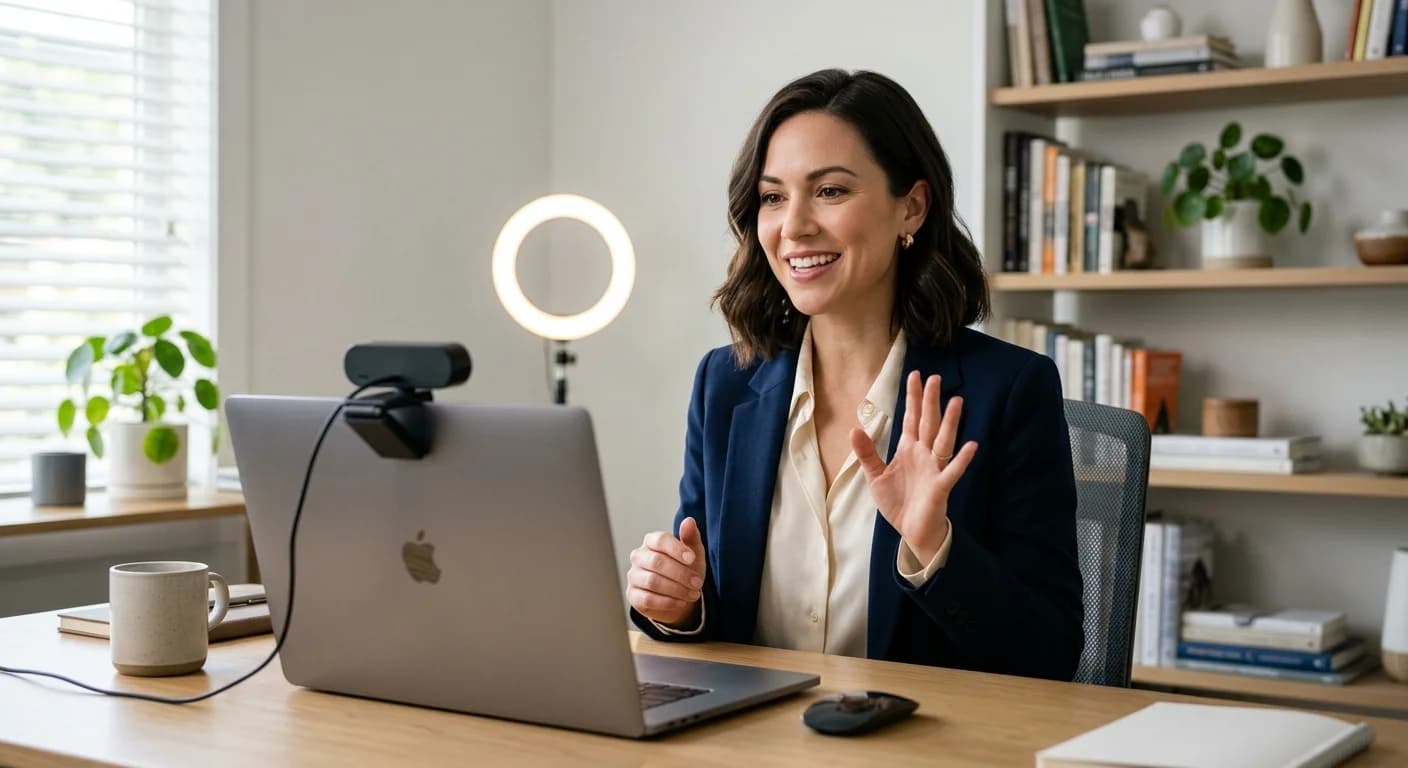
Imagine you are a hiring manager. You have 450 PDFs sitting in a folder. They all use the same font. They all claim to be 'results-oriented' and 'passionate' about the mission. By the fiftieth one, your eyes are glazing over. Then, you see a link. You click it, and suddenly, there is a human being. They are smiling, they are articulate, and within thirty seconds, you know exactly who they are.
That is the power of a video cover letter. But here is the catch: if you do it at the wrong time, or in the wrong way, you look like you don't understand professional boundaries. In the current job market, where human-centric hiring is making a massive comeback against the backdrop of AI-generated applications, knowing when to flip the camera on is a superpower.
The Vibe Check Economy
We have entered an era where technical skills are often seen as the baseline, not the differentiator. AI can write code, draft emails, and analyze spreadsheets. What it cannot do is build a relationship with a high-value client or lead a team through a high-stress pivot.
Companies are now hiring for 'vibe'—which is just a casual way of saying emotional intelligence, communication skills, and cultural alignment. A text-based cover letter is a terrible medium for conveying these traits. A video, however, captures the nuances of your personality that a bullet point never could.
When Video is Your Secret Weapon
You shouldn't send a video for every role. If you are applying for a highly technical position at a conservative government agency, stick to the PDF. But for the following scenarios, a video is often the reason you get the callback.
1. Client-Facing and Sales Roles
If your job requires you to persuade people, you need to prove you can do it. Whether it is Sales, Account Management, or Business Development, your voice and presence are your primary tools. A video cover letter is essentially a 'work sample.' You are showing the recruiter exactly how you would present yourself to a potential customer.
2. Creative and Marketing Positions
In creative fields, the 'how' matters as much as the 'what.' A video allows you to showcase your storytelling ability. If you can edit a tight, engaging 90-second video that holds a stranger’s attention, you have already proven you can do the job of a modern marketer.
3. Leadership and Culture-First Startups
Early-stage startups or companies that brag about their 'unique culture' are looking for people who fit their energy. If a company's social media is full of employee spotlights and behind-the-scenes content, they are practically begging for a video application. They want to see the person, not the persona.
4. Career Pivoters
If you are moving from one industry to another, your resume might look 'wrong' to an automated system. A video allows you to bridge the gap. You can look the recruiter in the eye and explain why your experience in hospitality makes you a world-class Project Manager. You can't always do that in a standard cover letter without sounding defensive.
Pro Tip
Use a video cover letter when the job description mentions 'excellent communication,' 'high energy,' or 'presentation skills.' These are coded signals that they value the person over the paperwork.
When to Stick to the Traditional PDF
There are times when a video will actually hurt your chances. You need to read the room. Avoid video if:
- The company uses a legacy ATS: Some older Applicant Tracking Systems (ATS) will simply strip out links or reject files they don't recognize.
- It’s a high-compliance industry: Law firms, medical institutions, and government contractors often have strict, standardized hiring processes to ensure equity and compliance. Deviating from the format can get you disqualified immediately.
- The job description explicitly says 'Submit PDF only': This is a test of your ability to follow instructions. Do not fail it by trying to be 'innovative.'
| Feature | Text Cover Letter | Video Cover Letter |
|---|
| Primary Goal | Detailed experience & facts | Personality & communication |
| Best For | Technical & Corporate roles | Sales, Creative, & Startups |
| Review Time | 10-30 seconds (scanning) | 60-90 seconds (engaging) |
| Risk Level | Low (Safe) | High (Polarizing) |
| Success Rate | Moderate | High (if done well) |
The Three-Act Structure of a Winning Video
Do not wing it. A rambling, three-minute video of you talking in a messy bedroom is a fast track to the 'No' pile. You need a script, even if you don't read it word-for-word. Aim for 60 to 90 seconds.
Act I: The Hook (0-15 seconds)
Skip the 'My name is...' and 'I am applying for...'. They already know that from the file name. Start with a punchy statement about a problem they have or a reason you love their brand.
*Example: "I’ve been following your expansion into the European market, and I noticed your recent campaign focused heavily on localized storytelling—that’s exactly where my expertise lies." *
Act II: The Proof (15-60 seconds)
Pick one or two 'hero' accomplishments that directly relate to the job. Don't recite your resume. Instead, tell a micro-story. Focus on results.
*Example: "At my last firm, I managed a team of six to overhaul our client onboarding. We reduced churn by 22% in four months. I want to bring that same focus on retention to your team." *
Act III: The Call to Action (60-90 seconds)
End with confidence. Tell them what you want to do next.
*Example: "I’d love to show you the framework I used for that project. Let me know when you have ten minutes to chat next week." *
Technical Standards for 2026
You don't need a Hollywood budget, but you do need to respect the viewer's time and senses. In 2026, the standard for 'professional' has shifted toward high-quality authentic content.
- Lighting: Face a window. Natural light is your best friend. If you look like you're in a witness protection program, the recruiter won't trust you.
- Audio: This is more important than video quality. Use a dedicated microphone or high-quality earbuds. If there is an echo or background noise, they will turn it off in five seconds.
- The Background: It doesn't have to be a sterile office, but it should be tidy. A bookshelf or a clean wall works perfectly. Avoid using those 'fake' Zoom backgrounds that make your ears disappear when you move.
- The Delivery: Look into the camera lens, not at yourself on the screen. It creates the illusion of eye contact.
Warning
Never send a raw video file (like an .MOV or .MP4) as an attachment. They are too large and often get blocked by firewalls. Use a hosting service like Loom or Vidyard. These tools allow you to see when the recruiter has actually watched the video.
Handling the 'Awkward' Factor
Most people hate being on camera. I get it. You feel self-conscious about your voice or the way you move your hands. Here is the reality: hiring managers don't care. They aren't looking for a movie star; they are looking for a colleague.
If you stumble over a word, don't restart the whole video. Just laugh it off, correct yourself, and keep going. That moment of 'humanity' actually makes you more likable. It shows you can handle a mistake with grace—a trait every manager wants in an employee.
The Ethics of Video: A Note on Bias
It is important to acknowledge that video cover letters can introduce unconscious bias into the hiring process. Some recruiters may (even unintentionally) make judgments based on your appearance, accent, or age.
If you are concerned about this, look at the company’s Diversity, Equity, and Inclusion (DEI) statements. Forward-thinking companies often have specific protocols for reviewing video applications to ensure fairness. If a company feels like the type of place that would judge you for your identity rather than your talent, a video might actually serve as a 'litmus test' for you. Do you really want to work for a team that doesn't value who you are?
How to Send It
Don't just drop a link into an email without context. You need to 'sell' the click.
The Wrong Way: "Here is a video of me. [Link]"
The Right Way: "I know you're likely swamped with applications, so I put together a 60-second video highlighting how my background in SaaS sales aligns with your current goals for Q4. You can view it here: [Link]"
This approach respects their time while piquing their curiosity. It shows you are thinking about their workload, not just your own needs.
Final Thoughts
A video cover letter is a high-leverage move. It takes more effort than hitting 'Apply' on LinkedIn, and that is exactly why it works. It signals to a hiring manager that you are not just spray-painting the market with resumes—you are specifically interested in them.
Next time you find a role that truly excites you, don't just write about why you're a great fit. Show them. Record the video, check the lighting, and hit send. The worst they can do is not watch it; the best they can do is hire the human they just met on screen.