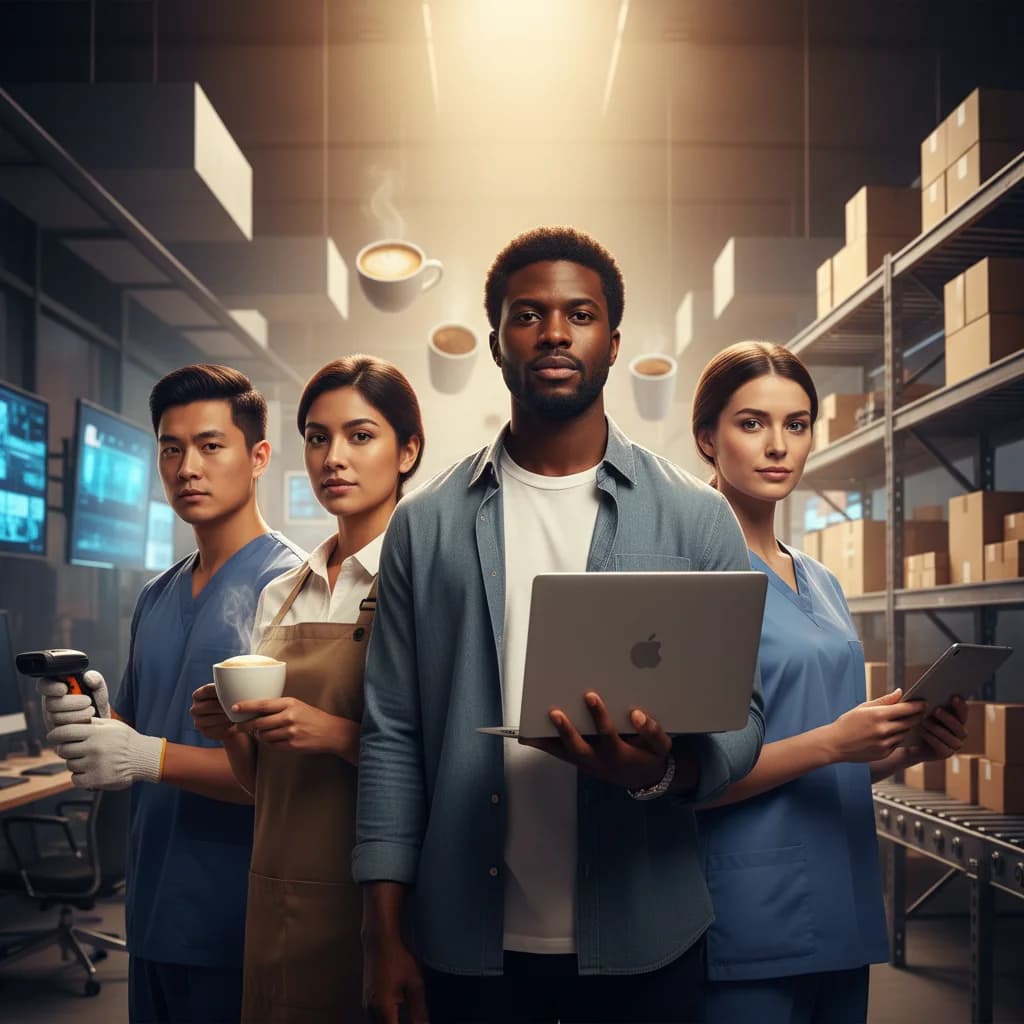
The person who handed you your morning coffee might have just finished a late-night call organizing their coworkers. The software engineer who pushed the latest update to your favorite app might be drafting a petition for better working conditions. This isn't your grandfather's labor movement, centered on factory floors and coal mines. A powerful, and often surprising, wave of union organizing is reshaping industries we once considered immune to collective action.
For decades, the narrative was one of decline. Union membership shrank, and the idea of organizing felt like a relic of a bygone era. But look closer. The ground has been shifting for years, and now the tremors are impossible to ignore. Workers in tech, retail, media, and higher education are standing up, not with bullhorns and picket signs (though those still have their place), but with encrypted chats, viral TikToks, and a renewed sense of solidarity. This isn't just a momentary trend; it's a fundamental re-evaluation of the relationship between labor and capital in the modern economy.
The New Front Lines of Labor
Forget the old stereotypes. The face of today's union organizer is diverse, digitally savvy, and working in sectors that define the 21st-century economy.
-
The Tech Sector: For years, the tech industry seemed untouchable. High salaries, stock options, and lavish perks were supposed to keep employees content. But beneath the surface of free lunches and ping-pong tables, issues like pay inequity, burnout, opaque management decisions, and ethical concerns over company projects have been festering. We've seen landmark organizing efforts at companies like Google, with the Alphabet Workers Union, and successful union votes at Apple retail stores. These aren't just about wages; they are about having a real voice in a powerful industry that shapes our world.
-
Retail and Service: The giants of retail and food service, like Amazon and Starbucks, have become major battlegrounds. The efforts here are often grassroots, driven by workers fed up with unpredictable scheduling, low pay, and grueling working conditions that were starkly highlighted during the pandemic. The Starbucks Workers United campaign, for instance, spread like wildfire from a single store in Buffalo, New York, to hundreds across the country, demonstrating the power of a decentralized, worker-led model.
-
Digital Media: The journalists who keep us informed are also organizing. Staffers at dozens of digital media outlets, from small niche publications to major online newsrooms, have formed unions to fight for editorial independence, better pay, job security in a volatile industry, and more diverse and equitable workplaces.
-
Higher Education: Graduate students, adjunct professors, and university staff are increasingly forming unions. They are fighting for recognition as employees, not just students or temporary staff, and demanding living wages, better healthcare, and a say in university policies that directly affect their work and lives.
What's Fueling the Fire?
This resurgence didn't happen in a vacuum. A confluence of economic, social, and technological factors has created fertile ground for a new labor movement.
-
Economic Precarity: Despite corporate profits soaring, wages for many have stagnated for decades when adjusted for inflation. The promise that a college degree guarantees a stable, middle-class life has eroded. Workers, saddled with debt and facing a high cost of living, are looking for ways to secure a larger share of the value they create.
-
The Pandemic Reckoning: The COVID-19 pandemic laid bare the stark inequalities in our workforce. Millions of workers were deemed "essential" but were often treated as disposable, lacking adequate safety protections, hazard pay, or paid sick leave. This experience was a radicalizing moment for many, proving that individual pleas for safety were often ignored while collective action got results.
-
A Generational Shift: Millennials and Gen Z entered the workforce during periods of economic instability. They have fewer attachments to the traditional employer-employee loyalty contract and have a stronger belief in collective action to achieve social and economic justice. Public approval of labor unions is now at its highest point in over 50 years.
Key Takeaway: The current organizing wave is less about a single issue and more about a holistic demand for dignity, respect, and a democratic voice at work. It's about having a seat at the table where decisions are made.
The Modern Organizer's Playbook
While the core principles of solidarity remain the same, the tools and tactics have evolved dramatically. Today's organizing campaigns are often faster, more transparent, and more technologically integrated.
| Traditional Methods | Modern Methods |
|---|
| Secret meetings in basements | Encrypted Signal & WhatsApp groups |
| Printed flyers left in breakrooms | Viral TikToks & Instagram infographics |
| Union hall gatherings | Company-wide Zoom calls for organizing |
| Word-of-mouth networks | Shared Google Docs & internal petitions |
| Picket lines & physical protests | Digital walkouts & social media campaigns |
This digital-first approach allows organizers to connect with coworkers across different shifts, locations, and even countries with unprecedented speed. It helps build community and solidarity before the campaign ever goes public, making it harder for management to divide and conquer.
The Inevitable Pushback: 21st-Century Union-Busting
As organizing efforts gain momentum, so does the opposition. Companies today deploy a sophisticated and often aggressive playbook to discourage unionization, a practice commonly known as union-busting. These aren't the violent tactics of the past; they are psychologically potent and legally ambiguous.
Common tactics include:
- Captive Audience Meetings: Forcing employees to attend mandatory meetings filled with anti-union rhetoric, often portraying unions as corrupt, third-party organizations that will only take their money.
- Hiring Anti-Union Consultants: Companies spend hundreds of millions of dollars collectively on consultants and law firms that specialize in running counter-campaigns. These firms are experts at creating fear, uncertainty, and doubt among the workforce.
- Surveillance and Intimidation: Monitoring employee communications and using one-on-one meetings with supervisors to identify and pressure pro-union workers.
- Weaponizing Delays: Using legal maneuvers to delay union elections and, more importantly, the bargaining process after a successful vote. The goal is to drain the union's momentum and resources.
Warning: It is illegal for an employer to threaten, interrogate, or fire you for engaging in union organizing activities. The National Labor Relations Board (NLRB) is the federal agency responsible for protecting these rights. Workers can and do file Unfair Labor Practice (ULP) charges when they believe their rights have been violated.
The Real Finish Line: Securing a First Contract
Winning a union election is a monumental achievement, but it's not the end of the fight. It's the beginning of a new, often more difficult one: negotiating a first contract.
This is where the abstract idea of a union becomes concrete. Collective bargaining is the process where worker representatives and management negotiate the terms of employment, including:
- Wages and raises
- Health insurance and retirement benefits
- Paid time off and sick leave
- Scheduling policies and staffing levels
- Health and safety protocols
- A grievance procedure for resolving disputes fairly
This process can take months, sometimes years. Employers can engage in bad-faith bargaining, where they go through the motions of negotiating without any real intention of reaching an agreement. This is a deliberate strategy to frustrate workers and make them question if their victory was worth it. It's in this protracted struggle that a union's strength, solidarity, and strategic planning are truly tested.
This new chapter in the labor movement is still being written. It's a complex, challenging, and deeply human story about the ongoing quest for a better working life. It's a reminder that industries don't change on their own; they are changed by the people who power them. The question is no longer if workers in these new sectors can organize, but how far they can go in redefining the future of work for everyone.