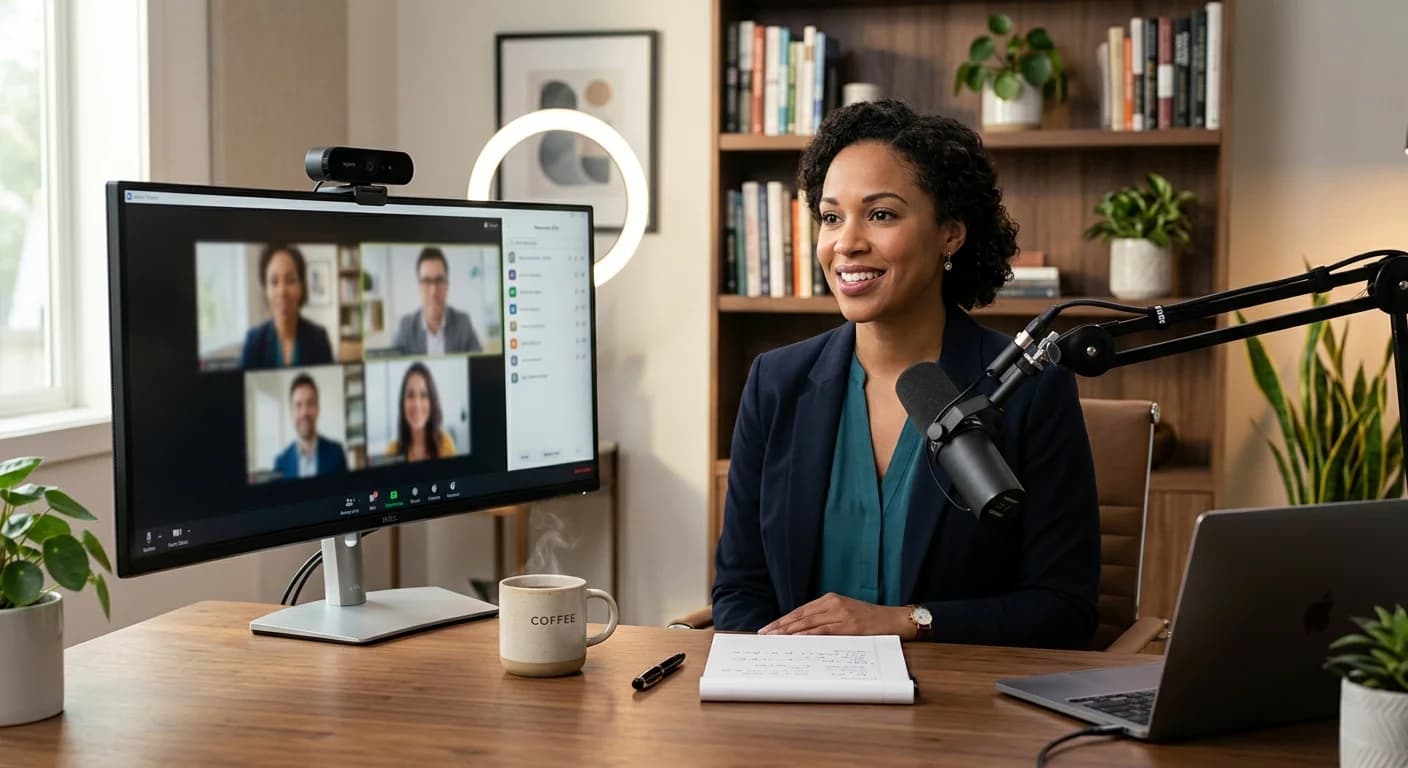
I’ve sat on both sides of the digital desk. I’ve been the remote hire trying to prove I wasn’t doing laundry during the 2:00 PM stand-up, and I’ve been the hiring manager filtering through three thousand applications for a single distributed role.
If you think landing a remote job is just like landing an office job but with better pants, you’re already behind.
By 2026, the novelty of working from home has vanished. It’s no longer a "perk" or an "experiment." It is a specific professional discipline. When I’m interviewing someone for a remote-first position today, I’m not just looking for technical skills. I’m looking for a specific type of operational maturity that office-based roles often mask.
Here is the reality of how the evaluation process has shifted and what you need to demonstrate to prove you can thrive without a boss hovering over your shoulder.
The Death of "Presence" and the Rise of "Output"
In a physical office, you can get a "halo effect" just by being there. If you’re at your desk early, stay late, and look busy in meetings, people assume you’re productive. In a remote environment, that visibility is gone.
As a hiring manager, I now look for evidence of output over activity. During the interview, I don’t care if you tell me you’re a "hard worker." I want to know how you track your own KPIs. I’m looking for candidates who can explain their personal workflow.
Pro Tip
When asked about your work style, describe the specific tools and rituals you use to stay focused. Mentioning your use of time-blocking, deep-work sessions, or how you manage your own Jira tickets without being prompted shows me you have a "manager of one" mindset.
Writing is the New Core Competency
In an office, if you’re a mediocre writer, you can compensate with a great personality or by catching someone at the coffee machine. In a remote-first company, writing is the primary way you exist to your colleagues.
Every Slack message, every Notion comment, and every email is a reflection of your professional brand. When I evaluate candidates, I am judging their writing from the very first touchpoint.
- Is the cover letter concise? Or is it a wall of text?
- Is the follow-up email professional? Or does it read like a text message?
- Can they explain a complex technical concept in three sentences?
If a candidate struggles to communicate clearly in writing during the hiring process, I know they will be a bottleneck on a distributed team. We don’t have time for three follow-up meetings to clarify one poorly written brief.
The Communication Comparison
| Skill Area | In-Office Expectation | Remote/Hybrid Requirement |
|---|
| Clarity | Can clarify in person if needed | Must be "right the first time" |
| Tone | Relies on body language/voice | Must convey intent through text |
| Speed | Immediate, often disruptive | Asynchronous, thoughtful, and documented |
| Conflict | Resolved in a quick meeting | Resolved through collaborative docs or video |
The "Single Player" Mindset: Autonomy Over Collaboration
We talk a lot about collaboration, but remote work is actually about sustained periods of isolation.
When I’m interviewing, I’m looking for what I call the "Single Player" mindset. Can this person move a project forward when they hit a roadblock at 10:00 PM and their manager is in a different time zone?
I look for stories of resourcefulness. I’ll ask questions like: "Tell me about a time you were blocked on a project and couldn't reach anyone for help. What did you do?"
If the answer is "I waited for the next morning's meeting," they’ve failed. If the answer is "I searched the internal documentation, found a similar past project, and created a temporary workaround to keep moving," they’re hired.
Technical Hygiene is No Longer Optional
In 2021, we were all forgiving of bad Wi-Fi and barking dogs. In 2026, the grace period is over.
Your "office"—even if it’s a corner of your bedroom—is your professional infrastructure. If a candidate shows up to a high-stakes interview with grainy video, a distracting background, or audio that sounds like they’re underwater, it tells me they don’t take their remote setup seriously.
Warning
Your technical setup is a proxy for your professional reliability. If you can’t manage a 30-minute Zoom call without technical issues, I won't trust you to manage a six-month project remotely.
Employers are now looking for:
- Audio Quality: A dedicated microphone or high-quality headset.
- Lighting: No more being a silhouette in front of a bright window.
- Stability: A wired connection or high-tier mesh Wi-Fi system.
- Security: Knowledge of VPNs, Zero Trust architecture, and basic home network security.
Navigating the Asynchronous Interview
One major shift in remote hiring is the use of asynchronous assessments. You might be asked to record a Loom video explaining a project or complete a writing exercise before you ever talk to a human.
Many candidates hate this. They feel it’s impersonal. However, savvy candidates realize this is their best chance to shine. This is your opportunity to demonstrate your digital fluency.
When a company asks for a video recording, they aren't just checking your skills; they’re checking if you can use modern tools to communicate effectively across time zones. Do you look at the camera? Is your screen share organized? Do you get to the point quickly?
Evaluating Cultural "Add" vs. Cultural "Fit"
Remote companies have to be more intentional about culture because they don't have a physical space to define it. In a traditional setting, "culture fit" often meant "someone I’d like to grab a beer with."
In remote hiring, we look for Cultural Add. We want to know how your specific background and work ethics will improve our distributed environment.
We look for traits like:
- Empathy in communication: Do you assume positive intent in text-based messages?
- Transparency: Are you comfortable working "out loud" in shared channels where everyone can see your progress (and your mistakes)?
- Reliability: Do you do what you say you’re going to do, when you said you’d do it?
The Red Flags I Watch For
As a mentor, I tell my mentees that certain phrases are instant red flags in a remote interview. Avoid these like the plague:
- "I just need someone to tell me what to do." (Remote teams need self-starters, not order-takers.)
- "I love remote work because I can travel and work from cafes." (While true, it suggests you might be a connectivity risk. Focus on the work benefits, not just the lifestyle benefits.)
- "I'm not great with [Slack/Notion/Zoom/Jira]." (These are the basic tools of the trade. If you aren't great with them, learn them before the interview.)
Key Takeaway
Remote employers aren't just hiring for your skills; they are hiring your ability to manage yourself and your environment. You are your own IT department, your own office manager, and your own project coordinator.
Because I can’t see you work, I need to see what you’ve worked on. For developers, this is GitHub. For designers, it’s Behance or Dribbble. But for everyone else—marketers, PMs, HR—it’s becoming a personal website or a LinkedIn presence.
I recently hired a Project Manager specifically because they had a series of LinkedIn articles detailing how they handled a massive product pivot. That public record of their thinking process was more valuable than any bullet point on a resume.
If you want to be a top-tier remote candidate, start documenting your process publicly. Show me how you think, how you solve problems, and how you communicate.
Transitioning from Office to Remote
If you are currently in an office and trying to move to a remote role, your biggest challenge is the Trust Gap. The hiring manager is wondering if you can handle the freedom.
To bridge this gap, highlight any "remote-adjacent" experience you have:
- Did you manage a vendor in another city?
- Did you collaborate with a team in a different time zone?
- Did you lead a project that was entirely digital?
- Did you work from home two days a week and maintain high performance?
Frame your office experience through the lens of digital collaboration.
The Future of Remote Evaluation: AI and Beyond
By now, we all know that AI is part of the workflow. In 2026, I don't care if you use AI to help you draft an email or brainstorm a project plan. In fact, if you aren't using it, I might think you're inefficient.
However, I am looking for AI literacy. Can you use these tools to augment your output without losing your human perspective? During the interview, I might ask how you use AI to speed up your remote workflows. The wrong answer is "I don't." The right answer is a specific explanation of how you use it to summarize meetings, clean up code, or organize your calendar.
Closing Thoughts
The bar for remote work is higher than it was five years ago, and that’s a good thing. It means the people you’ll be working with are more disciplined, better communicators, and more reliable.
To stand out, stop focusing on the fact that you want to work from home. Start focusing on why you are better at working from home. Show them your system, prove your output, and demonstrate that your writing is sharp enough to lead.
Remote work isn't about where you sit; it's about how you deliver. Master the rubric, and the flexibility will follow.